So, during my investigation into this software I had two questions that I felt compelled to ask about. The first, whether the $80 version of this professional grade application was the exact same as the $200+ version available from Apple in disc form? And what kind of licensing did the downloaded version entail?
The Mac Genius looked up the information and informed me that this was indeed the actual version of the $200 software and not an Academic version either. So it will be upgradeable in the future.
In regards to the licensing agreements, he stated that according to Apple, if you - the license owner - own more than one Apple machine ie. Mac Desktop and Mac laptop, you have the ability to use the program that you have downloaded on both machines without having to pay for the program again. I asked if that meant that the Mac App store, in similar fashion to the iTunes store, would recognize that I downloaded this once before and not charge me another $80 for the software? He stated that he was not certain about this, but stated that it should recognize it by the Apple ID. He recommended downloading the software and networking it or placing it on a disc and installing it on the other machine.
You know, I may start liking this Mac App store after all. I am not happy about giving up my freedom but there is a certain amount of clarity in this way of doing business. For one thing, if this is as minimally restrictive as it sounds, I think that the App store will be another major hit for Apple.
Showing posts with label apple. Show all posts
Showing posts with label apple. Show all posts
Friday, January 07, 2011

Wednesday, April 28, 2010
Apple sets date for WWDC. It all comes together now....
In one of my posts I wondered about the reason for hosting the WWDC in late june, postulating that Apple was ready to disappoint in the quarter ending in June, due to relying solely on the iPad and Mac sales to drive the quarter. Seems as though everyone got this one wrong. If my estimates are correct, with WWDC being held on June 7th, this sets the quarter up nicely for a new release of the iPhone.
One wonders whether the events that took place at Gourmet Haus Staudt (where the prototype was lost) had anything to do with this. One also wonders what will be offered up in late June since there is an opening there for an Apple meeting also.
With the Palm purchase by HP and Apple appearing to be pulling out all of the stops on the iPhone - with videoconferencing - this summer could end up being one of the best for innovation ever.
LDD.
One wonders whether the events that took place at Gourmet Haus Staudt (where the prototype was lost) had anything to do with this. One also wonders what will be offered up in late June since there is an opening there for an Apple meeting also.
With the Palm purchase by HP and Apple appearing to be pulling out all of the stops on the iPhone - with videoconferencing - this summer could end up being one of the best for innovation ever.
LDD.
Wednesday, April 21, 2010
Conspiracy Theorists, how about this one?
Bloomberg today published an article, speculative as it may be, that Apple may tighten its noose around people attempting to "test" the iphone, limiting it to executives and a very close inner circle. Granted! But the final paragraph made me start to wonder about something:
So, reading between the lines, if Steve Jobs personally monitors a carry list, wouldn't Apple have known about the missing device in March? Wouldn't the most logical thing to do, if you were an employee, be to trace where you went before you lost the phone? Apple knew the phone was lost because it shut down the phone remotely. Or at the very least, the engineer shut down the phone immediately. If you're able to do that, using the mobile software, why couldn't you use the tracking device to at least give an idea of where the phone is located? Gizmodo and a few other blogs are saying that the tracking software does not presently work on iPhone OS 4.0. So how does the wipe out work? Or did the man at the bar, the one who found the phone, attempt to get into the phone more than 10 times producing an instant wipe out?
My point here is this. Steve Jobs must have known about the lost iPhone and the most logical thing to have done would be to contact the bar where the phone was lost. This was not done. WHY? I think you can see where I am going here.
Here's my Conspiracy Theory. Take it for what it's worth: The end of the quarter is in June. However, for reasons known only to the Apple Corp, the WWDC will not start until June 28th. A strange date if you want to see revenue, earnings from the iphone in that quarter. There is a strong possibility that the iPhone being touted on Gizmodo is NOT the iPhone that will be released. There is an even stronger possibility that the iPhone that we think is going to be released was deliberately left in the bar. Crazy? Well, not if you want to get all of the publicity out there before June. Whip up the frenzy and then over deliver with a product that no one can refuse. I believe that the final phone will look nothing like the one on Gizmodo and that this was in fact a deliberate play by Apple. The responses given by the Apple engineer make me suspicious. Gizmodo posted this and it didn't sound as if he was remorseful, scared or even livid. Add to that Apple's unusual sublime letter to Gizmodo to send back its device as opposed to a Cease And Desist order that usually comes down like a mighty hammer and I think that you can see that this may have been a ploy by Apple to control the press or even gauge the thought processes of consumers: Were they angry? Overjoyed? Excited? Yawning? Salivating? Additionally, what better way to get publicity and gauge the FanBoys and Techies than seeing if Gizmodo or Engadget will bite.
Okay, so it's just a theory, but here's where it really gets interesting. This quarter may be a wash! Why would anyone buy an iPhone before July if you knew a new one was coming out? A possible reliance on Mac sales and 3G iPads could ensue for this coming quarter, but the latter is a low margin affair. This will not affect earnings well, possibly leading to a downturn in the stock on the day of the earnings release, but recovering once consideration is given to what is coming next. No, it is possible that the September and the obvious December Quarter (New iTouches) are where Apple is hoping to shine. This product "leak" may have been a test to see just how much it will be accepted before the final product is made. And what, if anything, the tabloid geeks really want.
Yeah, call me a conspiracy theorist, but let's face it, you are thinking about it right?
LDD.
Citation: Bloomberg (Link)Apple Chief Executive Officer Steve Jobs personally monitors the so-called carry list of staff members allowed to take pre-release devices off the company’s campus, according to the former employee. Approved staff members must sign an additional confidentiality agreement, the person said.
So, reading between the lines, if Steve Jobs personally monitors a carry list, wouldn't Apple have known about the missing device in March? Wouldn't the most logical thing to do, if you were an employee, be to trace where you went before you lost the phone? Apple knew the phone was lost because it shut down the phone remotely. Or at the very least, the engineer shut down the phone immediately. If you're able to do that, using the mobile software, why couldn't you use the tracking device to at least give an idea of where the phone is located? Gizmodo and a few other blogs are saying that the tracking software does not presently work on iPhone OS 4.0. So how does the wipe out work? Or did the man at the bar, the one who found the phone, attempt to get into the phone more than 10 times producing an instant wipe out?
My point here is this. Steve Jobs must have known about the lost iPhone and the most logical thing to have done would be to contact the bar where the phone was lost. This was not done. WHY? I think you can see where I am going here.
Here's my Conspiracy Theory. Take it for what it's worth: The end of the quarter is in June. However, for reasons known only to the Apple Corp, the WWDC will not start until June 28th. A strange date if you want to see revenue, earnings from the iphone in that quarter. There is a strong possibility that the iPhone being touted on Gizmodo is NOT the iPhone that will be released. There is an even stronger possibility that the iPhone that we think is going to be released was deliberately left in the bar. Crazy? Well, not if you want to get all of the publicity out there before June. Whip up the frenzy and then over deliver with a product that no one can refuse. I believe that the final phone will look nothing like the one on Gizmodo and that this was in fact a deliberate play by Apple. The responses given by the Apple engineer make me suspicious. Gizmodo posted this and it didn't sound as if he was remorseful, scared or even livid. Add to that Apple's unusual sublime letter to Gizmodo to send back its device as opposed to a Cease And Desist order that usually comes down like a mighty hammer and I think that you can see that this may have been a ploy by Apple to control the press or even gauge the thought processes of consumers: Were they angry? Overjoyed? Excited? Yawning? Salivating? Additionally, what better way to get publicity and gauge the FanBoys and Techies than seeing if Gizmodo or Engadget will bite.
Okay, so it's just a theory, but here's where it really gets interesting. This quarter may be a wash! Why would anyone buy an iPhone before July if you knew a new one was coming out? A possible reliance on Mac sales and 3G iPads could ensue for this coming quarter, but the latter is a low margin affair. This will not affect earnings well, possibly leading to a downturn in the stock on the day of the earnings release, but recovering once consideration is given to what is coming next. No, it is possible that the September and the obvious December Quarter (New iTouches) are where Apple is hoping to shine. This product "leak" may have been a test to see just how much it will be accepted before the final product is made. And what, if anything, the tabloid geeks really want.
Yeah, call me a conspiracy theorist, but let's face it, you are thinking about it right?
LDD.
Friday, April 09, 2010
iPhone 4.0 My thoughts....
 I have a few thoughts about the upgrade. First of all, I do want to upgrade my phone due to the low ram and the ridiculous quantity of apps that I have collected over the past year. Many of them free, but with some apps priced at 0.99 and 1.99, the ecosystem is a "suckers paradise." I figure that Apple is making millions of dollars from this "Crack Garden." And when the software is done right, you cannot complain. You come running back for more. Believe me, no one is exempt from this.
I had planned on handing over my current 3G phone to my wife, but I think that she would want multitasking and video recording and, well, you get the point. She thought about giving it to the kids, but I think that's a big mistake, until she added "to use as an emergency phone. It's only $6.99 per month to add a line." Gosh, even AT&T is in on this "suckers paradise." So it is that if the pricing is favorable (and I mean really favorable, because I am a miser when it comes to these things), we will have two new iPhones (? iPhone HD, iPhone 4.0? iPhone 4G?), whatever they decide to call it.
For me, the high points of this new update are many, but none more so than # 1 and # 2. I have been waiting for #1 forever. So, without further ado, here's my opinion on yesterday's preview:
1. Multiple Exchange Accounts.
You know, I think Steve actually reads his emails, the blogs and reviews. I actually sent him two personal emails on this subject. Not expecting to receive an answer, I saw this voiced on many other boards. The iPhone has replaced all of my email reading tasks. I am no longer tied to a desk to read my messages. When I had a Palm, the actual idea of writing a response back with a stylus nauseated me. Now, I can even dictate the response back without problems.
But really, what was important to me was this. I never ever wanted to share my private family life with the company that I work for. Don't get me wrong. I love the company that I work for. They treat me well, but sharing the fact that I have to go to my kids' basketball game or show up at the PTA or go to my Mother's house for dinner just didn't feel right. Worse! Keeping two separate calendars was a real pain. Although I have not seen the implementation as of yet, I am hoping that we will be able to show both calendars superimposed. Bravo on this one.
2. Local Alerts.
Read my take on this in the previous post. But this should have been available in 2007. I mean calling this a new feature is a bit embarrassing.
3. Multitasking.
A lot has been written about this, but I think that the furor has been overblown a little. I really think that multitasking comes in a few flavors, but most are battery draining and performance lugs as noted on both the new Android devices and ALL Windows Mobile devices. For me, I have rarely ever wanted to use two apps at once. But there has always been the one exception: The Calculator. Although I am happy with Multitasking, so that
 we can use the calculator, I would have much rather have the OS-X approach to this which was to use DASHBOARD. For those of you who don't use a Mac, Dashboard in my opinion was the single most advanced feature that turned many people - myself and my family included- into Mac lovers. It utilized widgets that were installed into the Dashboard system and upon pressing the middle button on the mouse, overlayed a series of widgets - ie. Weather, calculator, sometimes games, time, and a host of downloadable widgets - which did not interfere with whatever it was that you had on the scr
 een. With another click or hitting escape, the overlay disappeared and you had your original display. It was almost as if you were running two separate entities in one. I always thought that this would be transferred to the iPhone, but it has not been. Personally, I would prefer the widget approach, particularly for the Calculator and the Calendar. Nevertheless, I can't argue with the Multitasking approach detailed yesterday.
I guess the one question that keeps popping up is are we really seeing multitasking? It would appear that whatever is running in the background, actually isn't running, but suspended. I have always thought about the Unix approach, which is a program doing a calculation, say 1+1=2,+1=3,+1..... while in another window you're doing something else, but upon return, you see something like 4096+1=4097,+1...., instead it looks like you'll see: 3+1=4,+1=5...., Pause, return 5+1=6,+1=7,+1. But they did show Skype working in the background. So I am not sure how this works. Is it suspended or is it active in the background? I really didn't understand Scott Forstall's explanation of this. I'm sure that developers will bring this up later.
4. CalDAv invitations.
Another Duh moment! This is another one of those things that, if it is what I think it is, should have been in the OS a long time ago. How many times have you gotten an invitation or an appointment in an email? In windows, you can click on the appointment and it sends it to Outlook and puts it in the calendar. This is one of those things that should have been available from at least the second iteration of the phone. But kudos to Apple for listening again. I really think that they listen attentively.
Can you believe it? These are the top 4 things that I am excited about with the iPhone. Yes, I like the bookstore, but I've got Amazon's Kindle on my iPhone already and it's doing a fine job, not to mention Stanza, which does a great job for books I've had from my Palm days. There is a lot to like about this update and luckily my contract is up in a few months so upgrading - if the price is right - will be a good thing.
LDD.
Addendum:
Did anyone see the SDK4 picture below? It was presented during the presentation. It was really glossed over, but I found a few interesting things in the diagram, mainly in the almost blurred tiny settings. See what you think about these:
1. iPod remote control accessories.

A-hem? What in the world? Are we talking about IR remotes, WiFi remotes? It's just a blurb, but it looks really interesting. Could it compete with Logitech's Harmony or is Logitech a part of this?
2. Embed PDF metadata.
I have no idea what this would be used for. Is this a good thing or a bad thing? Is it possible to label all of my journals with metadata for specific storage? Is it a DRM feature (not so nice if it is)?
3. In-App SMS.
Sounds delightful.
4. ?Dock based orientation.
I think that is already in place, but I could be wrong.
5. Date Data Detectors.
Absolutely wonderful and I would presume goes in place with the CalDAV explained above.
6. Address Data Detectors.
What a welcome addition. Less typing. No copy and pasting. Wonderful addition.
7. Tuesday 17.
Okay, this one is a bit of a stretch. But in the box of goodies, there's a date that shows Tuesday 17th. Tuesday is a popular day for Apple. A lot of newly released products come out on that day, but granted I am falling into the Distortion Field again - didn't I tell you, no one is immune? - so, I got to thinking, if it was good enough for the Beatles to play these sorts of games, why not Apple? Tuesday 17th, falls in August. Could we see the new iPhone or iPod Touch or iMac or whatever, on Tuesday, August 17th? I don't really think that this was a random picture. But maybe it is. In medicine we call these zebras, when you hear the clickety clack of a 4 - legged creature wearing horse shoes walking outside your window. Most of the times it's obvious, it's just a horse, but there's always someone who thinks it might be a Zebra. And today that's me :):).
LDD.
Local Alerts....New Feature? Say What?
Okay, so I saw the Apple presentation yesterday. I was totally impressed by the offerings. I could live without the iAds, but the fact that they are for free apps made me know that I could opt out if I wanted to. But what struck me senseless was the Local Alerts feature.
I admit that I have become ensconced in the world of Apple over the past two years. I thought long and hard before jumping ship from the Palm platform to the iPhone. But I have never looked back. But there was always something gnawing at me on many occasions: "My Palm could do that." I found myself saying that a lot when several things were not so readily available on the iPhone. Nothing was more glaring than Local Alerts!
Local Alerts were the mainstay for almost all of the important apps that I had on the Lifedrive. My pregnancy listing made in Smartlistogo would send out signals on dates that were important, along with color changes of names for dates that needed to be addressed. It was truly basic.
What nailed me during the presentation was that this was being presented as a New Feature! Something that we can now use as developers. I was stupified! This should have been a basic feature from day one.
For me this is great news. I constantly use Appigo's TODO program which must send its alerts through Apple before it comes back down to my phone. It's not bad, but fails in time sensitive conditions. Here are a few examples:
A. Write letter for A. Shobedoo. Must be done by April 1st.
Date entered: March 2nd.
Time to remind: March 27th.
Actual: March 27th (0900).
Analysis: Not a problem. I was reminded to finish the letter in a timely fashion.
B. Call for telephone deposition for L&I claim for Ms. T. on April 2nd at 4 pm.
Date entered: April 1st.
Time to remind: April 2nd at 3:30 pm.
Actual: April 2nd at 3:45 pm.
Analysis: Big Problem Here! I have always set my presets 15-20 minutes ahead of time
in case I am running behind. This one was set 30 minutes ahead of time and still it was
received 15 minutes late. Server issues?
If you have ever wondered why you would want a local alert, the above two scenarios should answer that question. I was always baffled by the fact that there was no local alert mechanism with the exception of the Calendar. Server issues are major. Apple has to be delivering thousands, if not millions of alerts each day. There is no chance that it can deliver these things on time, every time. My suspicion is that they have woken up and delivered so-called Local Alerts to reduce liability issues. In a program like TODO, if the alerts were about giving yourself Insulin Shots or having some life-saving medication being delivered at a specific time, down-time server issues could lead to potential law suits from developers and customers alike.
It is really about time that this service was offered. It really should have been done a long time ago. I am very happy about this, because now it means that I can write a program for OB that delivers timely reminders for my pregnant patients, ie. Mrs. J needs her glucola test this week or we need to do an ultrasound this week for Mrs. P. The other beauty of this is that since my iPhone has password protection and since Handbase has encryption, I can now use real names on my device. The idea of sending this alert to a 3rd party was not in concert with HIPAA.
This move now also solidifies my move to the Apple ecosystem as a viable alternative to Palm.
LDD.
I admit that I have become ensconced in the world of Apple over the past two years. I thought long and hard before jumping ship from the Palm platform to the iPhone. But I have never looked back. But there was always something gnawing at me on many occasions: "My Palm could do that." I found myself saying that a lot when several things were not so readily available on the iPhone. Nothing was more glaring than Local Alerts!
Local Alerts were the mainstay for almost all of the important apps that I had on the Lifedrive. My pregnancy listing made in Smartlistogo would send out signals on dates that were important, along with color changes of names for dates that needed to be addressed. It was truly basic.
What nailed me during the presentation was that this was being presented as a New Feature! Something that we can now use as developers. I was stupified! This should have been a basic feature from day one.
For me this is great news. I constantly use Appigo's TODO program which must send its alerts through Apple before it comes back down to my phone. It's not bad, but fails in time sensitive conditions. Here are a few examples:
A. Write letter for A. Shobedoo. Must be done by April 1st.
Date entered: March 2nd.
Time to remind: March 27th.
Actual: March 27th (0900).
Analysis: Not a problem. I was reminded to finish the letter in a timely fashion.
B. Call for telephone deposition for L&I claim for Ms. T. on April 2nd at 4 pm.
Date entered: April 1st.
Time to remind: April 2nd at 3:30 pm.
Actual: April 2nd at 3:45 pm.
Analysis: Big Problem Here! I have always set my presets 15-20 minutes ahead of time
in case I am running behind. This one was set 30 minutes ahead of time and still it was
received 15 minutes late. Server issues?
If you have ever wondered why you would want a local alert, the above two scenarios should answer that question. I was always baffled by the fact that there was no local alert mechanism with the exception of the Calendar. Server issues are major. Apple has to be delivering thousands, if not millions of alerts each day. There is no chance that it can deliver these things on time, every time. My suspicion is that they have woken up and delivered so-called Local Alerts to reduce liability issues. In a program like TODO, if the alerts were about giving yourself Insulin Shots or having some life-saving medication being delivered at a specific time, down-time server issues could lead to potential law suits from developers and customers alike.
It is really about time that this service was offered. It really should have been done a long time ago. I am very happy about this, because now it means that I can write a program for OB that delivers timely reminders for my pregnant patients, ie. Mrs. J needs her glucola test this week or we need to do an ultrasound this week for Mrs. P. The other beauty of this is that since my iPhone has password protection and since Handbase has encryption, I can now use real names on my device. The idea of sending this alert to a 3rd party was not in concert with HIPAA.
This move now also solidifies my move to the Apple ecosystem as a viable alternative to Palm.
LDD.
Saturday, March 13, 2010
Nirvana in Todo Land....Toodledo
 When I used my Lifedrive profusely, I often wondered what would happen if I forgot the gadget at home. All of my Todo lists were on the device. Naturally, I could have used the Exchange server at work as a backup, but there were times when I felt that my needs with the Exchange Server conflicted. For example, did I really need my workplace to know that I was visiting my mother or that I had to pick up milk at 5pm? Too personal. On the other hand, I needed to know about important meetings and the Lifedrive and all of the Palm devices afforded me a way of knowing these things well in advance - be it 1 hour, 1 day, 1 week. But I still yearned for something more. The day that I left my machine at home showed me that.
It was a tuesday as I recall, back in 2002, I had a calendar of events as long as my arm. I had to see patients, but in between that there were other things that had deadlines fast approaching - and all of those non-direct patient care deadlines were on the device. Some things required phone calls being made before 5pm, some before 2 pm. I couldn't keep up with them all. My Palm Tungsten kept everything in place. I missed nothing that day, but only after getting back in my car at lunch time and driving home to get it. My partners thought I was crazy, but I knew better. The day ended at 11pm, but not without me putting a check mark next to every single item on the Todo list for that day.
So I began thinking.... Backing up the Todo list and the calendar to the PC was not the best thing in the world. If you left the gadget at home, you had two devices at home - The gadget and the PC. Enter Google!
Google was not the first to start putting things in the cloud, they are just the best at it. They have seen the future and it really is in cloud computing. Other companies have jumped on the bandwagon and some of these smaller companies are doing an incredible job. Again, I do want to give a shout out to Mobisystems for creating one of the first cloud devices, found on the palm with their MobiOffice suite for Palm. Hands down the best ever created for the Palm, eclipsing Dataviz. But I digress.
For the last two years I have been looking for a calendar solution that would integrate online and with the iPhone. I have yet to find a solution that works well. If I use my workplace Exchange calendar, it wipes out my regular calendar and events. If I use Google's calendar, I can't get my work calendar in at the same time due to the limitation of only 1 exchange server at a time on the device.
So, I began looking at the second problem that I was having, linking Todo lists which I use quite frequently. After reading "The 7 Habits of Highly Effective People," and "Getting Things Done," and eventually listening to the hyper linguistical Merlyn Mann, I have been keeping TODO lists since 2000 and perfecting them after reading and listening to the other two that I mentioned. The 7 Habits book was a lifestyle changer for me. I categorized everything that I had to do, including family time and forced breaks. I have since fallen away from some of the very draconian things that I used to do, but with work, I find that these lists are invaluable. If something is due next friday, I label it a "3." If it suddenly becomes more important, I drag it up to a "1." I am able to complete things, not always in a timely fashion, but complete them none the less, using this system of importance. It turns out that others have been using systems like this for years. In "The Toyota Way," one of the first electronic books that I ever downloaded, I was stunned to see how these systems were used over and over again in the production plants. Microsoft, in a book written by one of its serious gurus - Randall Stross, this system was not only looked at, but strictly adhered to and probably accounted for much of the incredible profits this company produced during the heady 90's. "The Microsoft Way by Randall Stross" is a book about nothing but lists. I couldn't believe it when I read it in 1999, soon after reading "The 7 Habits..."
Fast forward to the present day, after years of searching for the near perfect solution, I finally believe that I have found my list taking Nirvana. The website is called TOODLEDO.COM. There is a competit
 or called REMEMBERTHEMILK.COM that is similar. But what makes Toodledo so wonderful for me is its integration with a TODO list suite called TODO (What else right :)?). TODO is available on the iPhone and is a list makers dream. It is customizable and can synch with either your Mac Desktop wirelessly (which is a dramatic plus - can you hear me Dataviz????). But it can also synch with TOODLEDO.COM for free. What's nice about this is the fact that even without a desktop app for the TODO iPhone program (It synchs with the iCal application, but not in an elegant way), synching with TOODLEDO.COM affords the download of a desktop widget, which is basically your TODO list synched with your iPhone. Make a change to your iPhone and hit synch and the change is on the desktop in the widget, in the cloud and available from any machine, be it windows, linux, solaris, Mac OS X, Symbian, Pen & Paper :). That IS TODO Nirvana.
Now, I am looking for the same thing for a calendar program. I would like a calendar program on my iPhone or any phone for that matter that would just synch anywhere. Google doesn't quite cut it due to some issues on the iPhone, especially the lack of multiple exchange servers or at the very least allowing 2 exchange servers on the phone. In addition, I would like for the calendar to be able to show the calendars of the rest of my family. Even my young kids have gotten into the calendars now themselves. I would like to see those calendars and not have to put their events in my own calendar, but have it just show up. Still not there yet.
In regards to notes, I have found a note Nirvana solution too. But more on that later.
For now, I highly recommend the following for the chronic List Takers out there:
1. TOODLEDO.C
 OM - An online Todo list that synchs with iPhone's TODO.
2. iPhone App TODO by Appigo - A little expensive at $9.00, but very customizable and the best TODO app I have ever seen on the market. I've used at least 5 of them on the iPhone.
Honorable Mention:
1. REMEMBERTHEMILK.COM - These guys actually started the craze, but App
integration has been spotty. Additionally, the iPhone app is a
little too sparse, when compared to TOODLEDO.
2. Mobisystems Database for Palm - When I used it, it was the best Office App ever,
but it is a little dated now with the iPhone. Additionally,
there is no TODO list available. Still a great suite if you're
still using the old Palm OS. By the way, it won't crash your
Lifedrive. (This is really an honorable mention for a program
that brought me great joy).
LDD.
Tuesday, February 02, 2010
App Store: Open or Closed? What do you say?
This afternoon  was a pinnacle moment. One that will remain etched in time for me because of a decision that I made a year ago. It has proven to be the correct decision without a doubt.
I was on a journey in 2006 when my wife purchased a Lifedrive for my birthday. I couldn't decide when or if to stay with Palm, but all of my previous software would run on the Lifedrive (most of the time) and I was entrenched in the Palm ecosystem for at least another year or two I figured. At the time I thought that Palm would come out with a new operating system by 2006, then 2007.... but Nothing emanated! The system was old. My old software just wasn't cutting it anymore. I wanted more. Even the wonderful audiovisual beauty of the L ifedrive lost its luster. "Buy a TX," came the cry from others, "...it's just like a Lifedrive, but without the drive. So it's faster." But I became extremely cautious. I wondered whether transporting an old system to another new device was worth it. The more I read, the more I became worried. Another $300 on a legacy device was not worth it. As I read more blogs, I started disco
 vering that the TX was a lot like the Lifedrive, with one exception: It could restart a lot quicker! But it still had a lot of restarts because of the same operating system failing to work well with the NVFS. So I waited.
The wait grew longer and longer until Steve Jobs introduced the iPhone. My mind became clear. This is what a device was supposed to do. I never liked convergence devices because of the battery life, but this was something else. It was stylish, elegant, light, carried more capacity than a Lifedrive and just worked! But it had very little Medical Software. So, I waited. But I waited in awe. I saw the device at an airport terminal once and I asked the man in front of me if I could look at his device. It was amazing. Even my wife was amazed by its sheer simplicity. No stylus, just your finger.
Due to the lack of software, I stayed with Palm until finally in 2008, I purchased my first iPhone- The iPhone 3G. It carried 16 gb, 4x the size of my Lifedrive (You always want to trade up). Again the app store was sparse, but rudimentary versions of some important programs started to surface: Epocrates, HandBase, TealDocs (Which I have since erased - no need for this sort of thing anymore), but no Smartlistogo (what a wasted opportunity). I was also being introduced to Cloud Computing with the iPhone through several different websites. I was able to keep many documents in the cloud without a problem (by the way, let me give credit to Mobisystems for being one of the first to successfully introduce this in their Mobi suite on Palm. It worked well there too).
What has followed has been a steady stream of legacy programs updated, but more importantly there is now an entire ecosystem for programs that are not costly, and appear to generate more value for the dollar than on any system that has arisen before it. The App store has changed everything. And perhaps, if not because, this is due to Apple controlling almost everything that goes into the App store.
This is the major bone of contention however. For many, this gatekeeper is a sore and miserly figure w ho traverses the App Universe saying "Yes" or "No" at a single notice. Apps have been known to have been held in limbo for months before getting approved. The Google Phone App, which by the way has nothing to do with Google making it, but an independent programmer, has been held in limbo for months. The Facebook programmer Joe Hewitt actually quit the App store. He left parting quotes to the news media: "My decision to stop iPhone development has had everything to do with Apple’s policies,” “I am philosophically opposed to the existence of their review process.”
Locally, this has been quite a problem for some other people too. A drug rep showed up to my office 6 weeks ago to introduce a new device. We got to talking and after his presentation, he looked at my iPhone. He liked it, but he was with Verizon. He couldn't wait for the iPhone to come to Verizon, but was very excited that the Android was going to be available. I told him about how pleased I was with my iPhone and the entire Apple ecosystem. He felt that it was a little controlling and wondered whether open source would be better and quicker. However, I could tell that he really wanted an iPhone, but did not want to leave Verizon. I told him that I didn't mind the ecosystem. It enabled me to have a small amount of confidence that the software being installed would actually run and not wreck my entire device, ie. CaslBasic for the Lifedrive. I have had maybe two wayward apps that did nothing to the iPhone because the applications were confined to a sandbox. They could not ruin the address book or any of the system files, because they are not allowed to enter that realm. If faulty, they are removed without consequence until the developer updates the program.
3 weeks ago he came back into the office with a second round of devices to show me. After our business discussion was over, he was gleaming about his Android. Its buttons, its incredible screen, its incredible apps. Well, some apps which were actually not bad at all. I liked the multitasking, it was quite nice, but I didn't like the scrolling and the brief pause after hitting the icons. But I was biased. I love my iPhone. But he was in la-la- land and with the Google going full steam ahead in the advertising department, along with Verizon belittling the iPhone and AT&T, why shouldn't he? He was very gracious in his criticism about the iPhone, mainly the closed nature of the App store and the approval process, whereas he could download software from almost anywhere. I warned him about rogue software, but he was in la-la land. And who could blame him?
This afternoon it happened! He came back in to get a signature for a device for a patient. He was extremely sad. I asked him what happened. He told me that he downloaded a program for his Android called "Weatherbug." After a few clicks, it worked once, but then it completely shut down his system. He turned it back on only to find that he could run none of his apps and above all else, unable to make any phone calls at all. I couldn't believe it. This was no laughing matter! He had important calls, some life saving calls for his equipment and he couldn't answer them back. His entire phone was bricked !!!! He began panicking, but luckily he had done a backup of his system and his music and photos were still intact and many A/V files were stored on the SD card which was preserved. But the settings for programs and individual files were gone! Unless they were backed up. He was able to do a fresh install of the software, but settings and other file attributes were gone. Of course he did not reload the Weather Bug software.
After calming down to tell me about it, he performed a Mea Culpa: "I really want an iPhone!" He admitted that the closed system of Apple was probably responsible for something like this not happening with the iPhone in the first place. I told him that the gatekeeper system has its flaws, but it has kept millions of iPhone owners safe. It's the so-called Uber-Geeks who want freedom at any cost, even if the cost is destroying the very device that they are trying to save. I witnessed the process first hand with Palm. I am certain that many Lifedrive programs just crashed because of faulty software addressing nonexistent memory locations. Some companies programmed better than others.
Open vs. Closed? Most of the time I would choose Open, but when it's done correctly, a Closed system can have its benefits too. In this case, I am very happy that I chose to enter and stay in the walled garden of Apple.
 was a pinnacle moment. One that will remain etched in time for me because of a decision that I made a year ago. It has proven to be the correct decision without a doubt.
I was on a journey in 2006 when my wife purchased a Lifedrive for my birthday. I couldn't decide when or if to stay with Palm, but all of my previous software would run on the Lifedrive (most of the time) and I was entrenched in the Palm ecosystem for at least another year or two I figured. At the time I thought that Palm would come out with a new operating system by 2006, then 2007.... but Nothing emanated! The system was old. My old software just wasn't cutting it anymore. I wanted more. Even the wonderful audiovisual beauty of the L
 ifedrive lost its luster. "Buy a TX," came the cry from others, "...it's just like a Lifedrive, but without the drive. So it's faster." But I became extremely cautious. I wondered whether transporting an old system to another new device was worth it. The more I read, the more I became worried. Another $300 on a legacy device was not worth it. As I read more blogs, I started disco
 vering that the TX was a lot like the Lifedrive, with one exception: It could restart a lot quicker! But it still had a lot of restarts because of the same operating system failing to work well with the NVFS. So I waited.
The wait grew longer and longer until Steve Jobs introduced the iPhone. My mind became clear. This is what a device was supposed to do. I never liked convergence devices because of the battery life, but this was something else. It was stylish, elegant, light, carried more capacity than a Lifedrive and just worked! But it had very little Medical Software. So, I waited. But I waited in awe. I saw the device at an airport terminal once and I asked the man in front of me if I could look at his device. It was amazing. Even my wife was amazed by its sheer simplicity. No stylus, just your finger.
Due to the lack of software, I stayed with Palm until finally in 2008, I purchased my first iPhone- The iPhone 3G. It carried 16 gb, 4x the size of my Lifedrive (You always want to trade up). Again the app store was sparse, but rudimentary versions of some important programs started to surface: Epocrates, HandBase, TealDocs (Which I have since erased - no need for this sort of thing anymore), but no Smartlistogo (what a wasted opportunity). I was also being introduced to Cloud Computing with the iPhone through several different websites. I was able to keep many documents in the cloud without a problem (by the way, let me give credit to Mobisystems for being one of the first to successfully introduce this in their Mobi suite on Palm. It worked well there too).
What has followed has been a steady stream of legacy programs updated, but more importantly there is now an entire ecosystem for programs that are not costly, and appear to generate more value for the dollar than on any system that has arisen before it. The App store has changed everything. And perhaps, if not because, this is due to Apple controlling almost everything that goes into the App store.
This is the major bone of contention however. For many, this gatekeeper is a sore and miserly figure w
 ho traverses the App Universe saying "Yes" or "No" at a single notice. Apps have been known to have been held in limbo for months before getting approved. The Google Phone App, which by the way has nothing to do with Google making it, but an independent programmer, has been held in limbo for months. The Facebook programmer Joe Hewitt actually quit the App store. He left parting quotes to the news media: "My decision to stop iPhone development has had everything to do with Apple’s policies,” “I am philosophically opposed to the existence of their review process.”
Locally, this has been quite a problem for some other people too. A drug rep showed up to my office 6 weeks ago to introduce a new device. We got to talking and after his presentation, he looked at my iPhone. He liked it, but he was with Verizon. He couldn't wait for the iPhone to come to Verizon, but was very excited that the Android was going to be available. I told him about how pleased I was with my iPhone and the entire Apple ecosystem. He felt that it was a little controlling and wondered whether open source would be better and quicker. However, I could tell that he really wanted an iPhone, but did not want to leave Verizon. I told him that I didn't mind the ecosystem. It enabled me to have a small amount of confidence that the software being installed would actually run and not wreck my entire device, ie. CaslBasic for the Lifedrive. I have had maybe two wayward apps that did nothing to the iPhone because the applications were confined to a sandbox. They could not ruin the address book or any of the system files, because they are not allowed to enter that realm. If faulty, they are removed without consequence until the developer updates the program.
3 weeks ago he came back into the office with a second round of devices to show me. After our business discussion was over, he was gleaming about his Android. Its buttons, its incredible screen, its incredible apps. Well, some apps which were actually not bad at all. I liked the
 multitasking, it was quite nice, but I didn't like the scrolling and the brief pause after hitting the icons. But I was biased. I love my iPhone. But he was in la-la- land and with the Google going full steam ahead in the advertising department, along with Verizon belittling the iPhone and AT&T, why shouldn't he? He was very gracious in his criticism about the iPhone, mainly the closed nature of the App store and the approval process, whereas he could download software from almost anywhere. I warned him about rogue software, but he was in la-la land. And who could blame him?
This afternoon it happened! He came back in to get a signature for a device for a patient. He was extremely sad. I asked him what happened. He told me that he downloaded a program for his Android called "Weatherbug."
 After a few clicks, it worked once, but then it completely shut down his system. He turned it back on only to find that he could run none of his apps and above all else, unable to make any phone calls at all. I couldn't believe it. This was no laughing matter! He had important calls, some life saving calls for his equipment and he couldn't answer them back. His entire phone was bricked !!!! He began panicking, but luckily he had done a backup of his system and his music and photos were still intact and many A/V files were stored on the SD card which was preserved. But the settings for programs and individual files were gone! Unless they were backed up. He was able to do a fresh install of the software, but settings and other file attributes were gone. Of course he did not reload the Weather Bug software.
After calming down to tell me about it, he performed a Mea Culpa: "I really want an iPhone!" He admitted that the closed system of Apple was probably responsible for something like this not happening with the iPhone in the first place. I told him that the gatekeeper system has its flaws, but it has kept millions of iPhone owners safe. It's the so-called Uber-Geeks who want freedom at any cost, even if the cost is destroying the very device that they are trying to save. I witnessed the process first hand with Palm. I am certain that many Lifedrive programs just crashed because of faulty software addressing nonexistent memory locations. Some companies programmed better than others.
Open vs. Closed? Most of the time I would choose Open, but when it's done correctly, a Closed system can have its benefits too. In this case, I am very happy that I chose to enter and stay in the walled garden of Apple.
Thursday, January 28, 2010
The iPad
Today's announcement was again another master stroke from Steve Jobs. However, most in Techland are unimpressed by the device. Its name seems to offend some women, if the blogs are to be believed. Its lack of Flash is still hitting hard in some circles; the OS being possibly some flavor of iPhone OS 4.0 and not OS X 5.1.X seems to be bothering a lot of pe ople, even though these things don't seem to upset people in the Netbook arena running a watered down Linux or Android system.
To call this a big, fat iPod Touch would be close, but not completely precise. It appears to have created a niche unto itself. It's not an eBook - it's a lot better. Yet, it's not a portable laptop - it's less than that. It is a class all by itself.
It appears to beat the Kindle, something that I was about to buy in December to read more books. I believe that the pricing is the killer app! A lot of people expected $1,000. What they did was segment the market, while still keeping even the top model below the price of a MacBook. Brilliant ! They now have segments in just about all markets: The Sub $500 market will get you the low end iPad, any series of iPhones or iPod Touches; 500-999 will get you a used Macbook Pro or a MacBook or any series of iP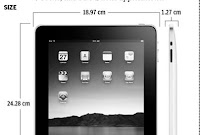 ads; 1000-1500 will get you a Macbook and a low end Macbook Pro or a desktop iMac fully loaded. 1500-2500 will get you an extra fully loaded iMac, a super duper Macbook and a fully loaded Macbook Pro. 2500+ will get you a Mac Pro - the PC looking separate machine with a monitor separate. They own this entire genre. Not to mention the fact that everything talks to everything else.
Some are ticked off that the iPad has no USB slot, but why would you need it? It's an advanced eReader basically, not a full fledged computer. And what about the iWork series on this thing? $10 buys you brilliance. So, they have Price, Products and a large developer population. The No-Boys (and they are mainly boys) say that this product is too lightweight and will fail dismally.
I say "NO!" The product is pure genius. I believe that many women will purchase this product. Mainly because it doesn't get in the way of doing whatever it is you are doing. There is no Operating system to worry about; no virus shield etc. The 3G option without a contract is again pure genius. I can see myself going away for a week and staying on 3G while I'm out and using the hotel wifi for everything else. I think that the only thing that will remain is whether AT&T means it when it says Unlimited Wifi or if it's 5 Gigabytes?
I think that Apple will learn a thing or two from Palm however. I don't think that Steve mentioned Iphone OS 4.0. I think that that will come either next month or during the iPhone presentation. Why is that important? Because I believe that we will see MULTI TASKING during 4.0. Jobs actually listens to the criticism. This is a 1.0 device. But I will probably still buy it to talk with all of my other Apple products. The syncing and the Sphere is just so compelling.
But look for OS 4.0 to take a gigantic hint from Palm with its opening page. I don't think that we will be thumbing through pages and pages of apps. I expect to see some kind of folder.
So, to my original query. Who will buy the iPad? Doctors, healthcare workers, people who like reading books, women, not kids and not teenagers, some tech savvy users, but not most, but definitely those who do not "like" or "get" computers. At $499, it's going to be compelling. It's better than an eBook reader; better than a Netbook and with excellent productivity software, it outshines a lot of laptops.
I think it's going to be a Winner. Uber-Geeks sit this one out!
LDD.
 ople, even though these things don't seem to upset people in the Netbook arena running a watered down Linux or Android system.
To call this a big, fat iPod Touch would be close, but not completely precise. It appears to have created a niche unto itself. It's not an eBook - it's a lot better. Yet, it's not a portable laptop - it's less than that. It is a class all by itself.
It appears to beat the Kindle, something that I was about to buy in December to read more books. I believe that the pricing is the killer app! A lot of people expected $1,000. What they did was segment the market, while still keeping even the top model below the price of a MacBook. Brilliant ! They now have segments in just about all markets: The Sub $500 market will get you the low end iPad, any series of iPhones or iPod Touches; 500-999 will get you a used Macbook Pro or a MacBook or any series of iP
 ads; 1000-1500 will get you a Macbook and a low end Macbook Pro or a desktop iMac fully loaded. 1500-2500 will get you an extra fully loaded iMac, a super duper Macbook and a fully loaded Macbook Pro. 2500+ will get you a Mac Pro - the PC looking separate machine with a monitor separate. They own this entire genre. Not to mention the fact that everything talks to everything else.
Some are ticked off that the iPad has no USB slot, but why would you need it? It's an advanced eReader basically, not a full fledged computer. And what about the iWork series on this thing? $10 buys you brilliance. So, they have Price, Products and a large developer population. The No-Boys (and they are mainly boys) say that this product is too lightweight and will fail dismally.
I say "NO!" The product is pure genius. I believe that many women will purchase this product. Mainly because it doesn't get in the way of doing whatever it is you are doing. There is no Operating system to worry about; no virus shield etc. The 3G option without a contract is again pure genius. I can see myself going away for a week and staying on 3G while I'm out and using the hotel wifi for everything else. I think that the only thing that will remain is whether AT&T means it when it says Unlimited Wifi or if it's 5 Gigabytes?
I think that Apple will learn a thing or two from Palm however. I don't think that Steve mentioned Iphone OS 4.0. I think that that will come either next month or during the iPhone presentation. Why is that important? Because I believe that we will see MULTI TASKING during 4.0. Jobs actually listens to the criticism. This is a 1.0 device. But I will probably still buy it to talk with all of my other Apple products. The syncing and the Sphere is just so compelling.
But look for OS 4.0 to take a gigantic hint from Palm with its opening page. I don't think that we will be thumbing through pages and pages of apps. I expect to see some kind of folder.
So, to my original query. Who will buy the iPad? Doctors, healthcare workers, people who like reading books, women, not kids and not teenagers, some tech savvy users, but not most, but definitely those who do not "like" or "get" computers. At $499, it's going to be compelling. It's better than an eBook reader; better than a Netbook and with excellent productivity software, it outshines a lot of laptops.
I think it's going to be a Winner. Uber-Geeks sit this one out!
LDD.
Thursday, June 18, 2009
Site Down? Thanks Google.
I got word from Sam, a good friend of mine, that my site was down for a while. I confirmed it 3 weeks ago and found out that Google thought that my site was a Spam site.
I later received an apology from Google and the site was put back up this week. Luckily, I gain no income from this site, but there are some important links and information that a lot of people have grown to depend on residing in this simple one page site. Thus I am happy that the site is back up and functioning. And I thank Google for putting my site back up.
But that leads to a few questions. Do I want to continue doing this? Lifedrivedoc has almost outlasted its purpose. The fact that someone had to tell me that my own site was down is testament to that.
Now that Palm has released the Pre and I have just about chosen to go the Apple route, a very radical decision on my part, and one in which I will explain in a later blog posting, I feel compelled to let my opinions be known elsewhere.
There is still an awfully large amount of traffic traversing this site and so I pay to keep it up. I also appreciate the thank you's that have come by in regards to information on the Lifedrive. However, my use of the device has dropped considerably in the past few months.
I'll keep you posted on my whereabouts, but for now I am starting a new blog which reflects where my mind is at in terms of handheld technologies. I'll still post here, but I will also be posting at www.theiphonedoc.com on a more regular basis. I will be concentrating on Apple Apps, iPhone Apps, mainly medical and other things that appear.
I know that it will be one of many thousands out there, but I have to be true to myself at this point and again, I'll drop my thoughts on the reason for the switch at a later date.
Welcome back readers and I'll hopefully see you on both sites.
/LDD.
I later received an apology from Google and the site was put back up this week. Luckily, I gain no income from this site, but there are some important links and information that a lot of people have grown to depend on residing in this simple one page site. Thus I am happy that the site is back up and functioning. And I thank Google for putting my site back up.
But that leads to a few questions. Do I want to continue doing this? Lifedrivedoc has almost outlasted its purpose. The fact that someone had to tell me that my own site was down is testament to that.
Now that Palm has released the Pre and I have just about chosen to go the Apple route, a very radical decision on my part, and one in which I will explain in a later blog posting, I feel compelled to let my opinions be known elsewhere.
There is still an awfully large amount of traffic traversing this site and so I pay to keep it up. I also appreciate the thank you's that have come by in regards to information on the Lifedrive. However, my use of the device has dropped considerably in the past few months.
I'll keep you posted on my whereabouts, but for now I am starting a new blog which reflects where my mind is at in terms of handheld technologies. I'll still post here, but I will also be posting at www.theiphonedoc.com on a more regular basis. I will be concentrating on Apple Apps, iPhone Apps, mainly medical and other things that appear.
I know that it will be one of many thousands out there, but I have to be true to myself at this point and again, I'll drop my thoughts on the reason for the switch at a later date.
Welcome back readers and I'll hopefully see you on both sites.
/LDD.
Wednesday, March 25, 2009
Why I'm leaning a little.....
As many of you who have read my previous few postings on this blog can see, I am slowly leaning away from my Lifedrive towards something else. I have waited almost two years to see what is out there that can replace my OS.
.jpg)
I do not want to leave the Palm platform, since I have become accustomed to it. But with the advent of WebOS, a nascient OS that may not serve my long term needs for data management, I am looking at other alternatives.
What has become important is something that never existed 2 years ago - an App store! Yes, we had Handango and a few other sites for Palm, but to be honest, apart from the excellent catalog layout - which is sadly lacking with Apples App Store - the content is not altogether brilliant. There are pockets of excellent programs, particularly in the medical field, but many others are too rudimentary to cost what they do. For example the average cost of an App is about $10.00, while on the Apple store, it is less than half
of that. Palm and Handango and other sites were able to dictate the prices due to the small niche held by Palm at the time - a very long time for that matter. Some of the prices were extraordinary. For example, SplashiD for Palm has been listed at well over $20 ever since its inception. It costs $24 as of this writing. I actually spent a lot of money purchasing it as one of my main pieces of software on my Palm. However, when the product was ported over to the Apple App store, it cost just $9.95. However, they sell a separate desktop edition for $19.99. Many people just use the handheld version, an obvious mistake since it can be lost in synching. But why the price discrepancy?
Let's look again at the Medical part of the Palm section on Ha
ndango. The first 20 applications on the site are selling at an average price of $40.80 per application !!! Granted some of these are quite good applications, but most are reference materials. Are these applications really worth the price that they have been declared for the past 8 years?
To be honest, if many of these applications were about 25% to 50% of the cost noted, I would have probably had a lot more apps on my Lifedrive, instead of relying so heavily on my Database programs. And how much were the developers making wit
h this approach? I can't imagine that many of them sold thousands of copies of their products without special discounts etc?
Which leads to the question. Why didn't anyone ever consider an idea like an App store before Apple? Why did Palm not consider doing this? Controlling this? It would appear that like Microsoft, Palm preferred to have the solution come from many different directions. What accrued in the end was a plethora of software, but alot of incompatabilities as well.
But all of that pales in comparison to the next scenario. Now folks, this is something that I either never knew about or just failed to understand. It is also why I believe some of the software was priced out of the stratosphere to begin with.
It turns out that many of the developers on Handango and other sites where Apps are sold have been paying a rather hefty fee for hosting their files there. How much? Well, let's look at the following chart, taken from The Boy Genius Report in February, 2008
So that's 50% of the gross revenue for most apps going to Handango !!!! With that finding, I am now seeing why the applications are so costly. So one would think that with some outrage at this pricing, things would change for companies that are coming on board with their own App store right? Wrong! Fast forward to todays Boy Genius Report that Microsoft, which owns a large chunk of the mobile market has decided to do something so heinous that I almost crawled out of my skin when I read it.
Microsoft has decided that in order to place an App in their new App store, a developer will be allowed 5 free apps before being charged $99 for each app. Sounds okay at first, until you realize that each update of an application counts as an application !!!! So, if you decide to come out with something in beta - as many on the Apple App store do (just don't tell them all it's a beta product), or you or your customers find a bug in the software, then you may end up paying Microsoft $99 for the pleasure of updating your application. So, you may say, why not just go somewhere else and have your files hosted? Mmmgh, have you seen Apple's traction data? Compare it to the data for "jailbroken" app stores. Infact compare it to the traction data for any Mobile store ever made.
The result of this kind of pricing "scheme" is to eventually fleece the very consumer that is trying to purchase a product. It hurts everyone. It may be the reason why we are seeing so much innovation in iPhone applications in such a short amount of time. I would say that Apple's iPhone now only 2 years old, and its App store which is less than 1 year old is acting like a 5-6 year old store (ie. Palm, Handango, Palminfocenter), the former kings. I would venture to say that Apple's drive to collect 30% of gross revenues appears to be extremely fair, given all other scenarios. Additionally, developers faced stiff competition in the App space, where reviews were so visible for software and the power of the iPhone numbers and central location made it possible for many developers to lower the price of their software and concentrate on volume, rather than attempting to find niche players.
However, there is always going to be holdout! If you have an iPhone, pop over to the app store and look at a program called Stat E&M Coder. The lite version is free, but the developer must have had a flashback to Handango/LSD/mushrooms??? He decided to charge $79.99 for the full version of the program !!!! You've got that correct, if you think that this is an E/M coder for the iPhone. It is just that. Granted it codes for different specialties and it does it well, but with just 2 reviews as of this writing, I'm begining to think that others believe that this is too pricey as well. Will the old Palm developers who used to charge $79.99 and $40.00 - $50.00 succeed with this type of pricing on the iPhone? My gut instincts say no. The drive is for volume and developers will make very little money selling high priced applications, regardless of how complex it is. So will they just avoid the platform? I say no! The platform is too big after only 2 years and it's only getting bigger and bigger.
And I have not even mentioned the dawning of the iPhone 3.0 SDK. What a thing of beauty that is. The ability to let the phone talk to other devices is just going to be phenomenal. Will Palms' nascient WebOS be able to deliver all of this and more later this year? I am begining to have my doubts. Of course I hope that they do, but come June my mind will be made up permanently about what the move for me will be. Right now, it's tipping a little towards Apple, for the same reason that it was on the side of Palm for so many years ------SOFTWARE!
LDD.
Resources:
Tuesday, June 17, 2008
Apple SDK
I had the opportunity to look at the SDK developmental platform for the iPhone last week, after signing up to become a member of the Developmental Team. Don't worry, anyone can sign up for this, it's not special. What I ended up downloading was a collection of videos showing how to use Cocoa (the developmental environment) to create Visual - C programs. It was a little heady, given the fact that I am not a C-Programmer.
But the results are definitely interesting. The buttons (virtual) are all accessible in the sdk, just like in Visual Basic. But they appear to be much more powerful, with pre-scripted macros already in place. There is nice fluid movement on the screen.
The actual writing of code is not simple, but again, there are many examples and macros that you simply plug into a button, that it looks a lot easier than writing in Visual Basic. There are address macros which automatically populate the correct fields. Again, somewhat similar to some of the visual basic sdk stuff. However with such automation, some programs may get that "look the same" feeling.
The products that I have seen thus far have been impressive. Credit Apple for showing these a month in advance and then allowing us to absorb all the hype before July 11th. It is becoming a frenzy at the moment. The medical applications, showing MRI and Pet scans at the WDC were impressive. I am still looking for other medical applications however to take over database tasks such as Smartlist, HandBase and OB programs found on the Palm platform. I have no doubt that they are just around the corner.
For the iPhone to be really successful, Apple must come out with a Database Program that will blow everything away. They already have Filemaker on the Mac end and I could see something coming from this, with the ability to put in conditional flags etc. Additionally, any database file must be simple to program.
Perhaps the most impressive thing that I saw last week and in the videos offered by the Developer team, was the over-the-air connectivity. I believe that I first saw this created well with Mobisystems Office on the Palm. I stand by that today. It is almost unwritten anywhere, but I truly believe that this suite was (before they went awry with the open source PDF) the best ever created for a Palm Top Device. The fact that they offered remote storage, accessible by the Lifedrive over the air, was jaw-dropping. It acted like a FTP service and it still works really well (did I mention that it's free)?
The Apple versions of this, in both Exchange and MobileMe are the next step forward. 20 Gigabytes of storage for MobileMe and if it works as advertised, seamless access to personal files both on the home computer and on the iPhone. Exchange's ability to auto sync to the office calendar and email is fantastic. One wonders if there will be an ability to have Exchange and MobileMe work at the same time, so that a personal calendar can be superimposed upon the Exchange calendar on the iPhone? Can Exchange be turned on and then off, without erasing the calendar. On the Lifedrive, if you try to sync the calendar to the desktop, it wipes out the Exchange dates. The same holds true when syncing to Exchange. Hopefully these fine points will be worked out.
Overall, I am impressed by the products. As for the SDK, I have not had the opportunity to work with it yet. I cannot tell if it will be simple to use or not. I am a little disappointed that Apple did not adopt the Widget route, so that we could transport the widgets to the iPhone, but it would appear that the company is doing everything right at the present time. A slow roll out and updated hardware to match.
LDD.
But the results are definitely interesting. The buttons (virtual) are all accessible in the sdk, just like in Visual Basic. But they appear to be much more powerful, with pre-scripted macros already in place. There is nice fluid movement on the screen.
The actual writing of code is not simple, but again, there are many examples and macros that you simply plug into a button, that it looks a lot easier than writing in Visual Basic. There are address macros which automatically populate the correct fields. Again, somewhat similar to some of the visual basic sdk stuff. However with such automation, some programs may get that "look the same" feeling.
The products that I have seen thus far have been impressive. Credit Apple for showing these a month in advance and then allowing us to absorb all the hype before July 11th. It is becoming a frenzy at the moment. The medical applications, showing MRI and Pet scans at the WDC were impressive. I am still looking for other medical applications however to take over database tasks such as Smartlist, HandBase and OB programs found on the Palm platform. I have no doubt that they are just around the corner.
For the iPhone to be really successful, Apple must come out with a Database Program that will blow everything away. They already have Filemaker on the Mac end and I could see something coming from this, with the ability to put in conditional flags etc. Additionally, any database file must be simple to program.
Perhaps the most impressive thing that I saw last week and in the videos offered by the Developer team, was the over-the-air connectivity. I believe that I first saw this created well with Mobisystems Office on the Palm. I stand by that today. It is almost unwritten anywhere, but I truly believe that this suite was (before they went awry with the open source PDF) the best ever created for a Palm Top Device. The fact that they offered remote storage, accessible by the Lifedrive over the air, was jaw-dropping. It acted like a FTP service and it still works really well (did I mention that it's free)?
The Apple versions of this, in both Exchange and MobileMe are the next step forward. 20 Gigabytes of storage for MobileMe and if it works as advertised, seamless access to personal files both on the home computer and on the iPhone. Exchange's ability to auto sync to the office calendar and email is fantastic. One wonders if there will be an ability to have Exchange and MobileMe work at the same time, so that a personal calendar can be superimposed upon the Exchange calendar on the iPhone? Can Exchange be turned on and then off, without erasing the calendar. On the Lifedrive, if you try to sync the calendar to the desktop, it wipes out the Exchange dates. The same holds true when syncing to Exchange. Hopefully these fine points will be worked out.
Overall, I am impressed by the products. As for the SDK, I have not had the opportunity to work with it yet. I cannot tell if it will be simple to use or not. I am a little disappointed that Apple did not adopt the Widget route, so that we could transport the widgets to the iPhone, but it would appear that the company is doing everything right at the present time. A slow roll out and updated hardware to match.
LDD.
Wednesday, April 09, 2008
Caveat Emptor: Apple SDK - will it change the Medical PDA?
From the very first day that the iPhone was mentioned, I pictured the writing on the wall. Palm would be knocked from its seat atop the medical apps world. Windows CE/Mobile would be a 3rd class citizen. I saw images of xrays, speech recognition software, e-readers with superior screens and that virtual keyboard, which seemed to beat graffiti, hands down overtaking anything that had ever preceded it.
However, from my perch, overlooking the sea of change, I perceived something else. It came to me last month when Steve Jobs debuted the iPhone SDK. One of the programs shown, running natively on the iPhone was EPOCRATES - My favorite medical app. Although I was happy to see EPOCRATES joining the sea of change, I began to have a slightly negative chill run through my veins this week.
One of the nice things about EPOCRATES is its seemless nature, jumping back and forth between applications and searches and updating itself almost automatically. However, herein lies the problem. PRIVACY !!!
For those of us who use EPOCRATES daily, we know that the company saves a list of the drug searches that are placed in the search box. If we use the online version, these searches are recorded. What becomes of these searches? Who views them? Are they open to scrutiny from drug companies etc ?
And who can forget the day when you bought your first PDA and it appeared robust, clean and snappy. Then you installed a few apps and suddenly you found your then large 64 mb memory turning to scraps and your brand new spiffy device beginning to crawl, falling victim to MEMORY HOGGING!
EPOCRATES is huge! It literally takes over your Palm device when you install it. It begs to be updated if you are 30 days out. It allows you to earn CME on your device by browsing over documents. Data, unknown to you, is sent back to Epocrates. What becomes of it? What else is being sent to EPOCRATES?
Don't get me wrong. I think EPOCRATES is fantastic. I have just signed up for another year to use them, but I use them as an example. There are a lot of companies competing to be a part of the Apple halo effect. There is pent up demand, akin to the early Palm days. But could we find ourselves in the same software bind that beckons us to leave Palm or Windows CE/Mobile? Will the new medical software take up 1/2 to 3/4 of the disk space, leaving what little space on the device useless, thus slowing the machine down to a dull roar? Will we be the subject of constant data mining, going on behind the scenes, with programs calling back to home (How would you like to be on vacation in another state, using your iPhone, not knowing that you are being tracked by one of the pieces of software that you have installed, because it calls home every time you turn on your device)?
We are all looking at the fantastic potential the iPhone and possibly other new devices have in store for us. But we must be careful not to let this fascination with advancement cloud our judgment, giving away our souls in the process. Medicine is an art and a science, but if we let others dictate what we should do, even surreptitiously, just to make life a little easier, we stand the chance of not living up to our maxim: Primum non nocere. As we embark upon this great future, we must DEMAND this of the software makers also.
LDD.
However, from my perch, overlooking the sea of change, I perceived something else. It came to me last month when Steve Jobs debuted the iPhone SDK. One of the programs shown, running natively on the iPhone was EPOCRATES - My favorite medical app. Although I was happy to see EPOCRATES joining the sea of change, I began to have a slightly negative chill run through my veins this week.
One of the nice things about EPOCRATES is its seemless nature, jumping back and forth between applications and searches and updating itself almost automatically. However, herein lies the problem. PRIVACY !!!
For those of us who use EPOCRATES daily, we know that the company saves a list of the drug searches that are placed in the search box. If we use the online version, these searches are recorded. What becomes of these searches? Who views them? Are they open to scrutiny from drug companies etc ?
And who can forget the day when you bought your first PDA and it appeared robust, clean and snappy. Then you installed a few apps and suddenly you found your then large 64 mb memory turning to scraps and your brand new spiffy device beginning to crawl, falling victim to MEMORY HOGGING!
EPOCRATES is huge! It literally takes over your Palm device when you install it. It begs to be updated if you are 30 days out. It allows you to earn CME on your device by browsing over documents. Data, unknown to you, is sent back to Epocrates. What becomes of it? What else is being sent to EPOCRATES?
Don't get me wrong. I think EPOCRATES is fantastic. I have just signed up for another year to use them, but I use them as an example. There are a lot of companies competing to be a part of the Apple halo effect. There is pent up demand, akin to the early Palm days. But could we find ourselves in the same software bind that beckons us to leave Palm or Windows CE/Mobile? Will the new medical software take up 1/2 to 3/4 of the disk space, leaving what little space on the device useless, thus slowing the machine down to a dull roar? Will we be the subject of constant data mining, going on behind the scenes, with programs calling back to home (How would you like to be on vacation in another state, using your iPhone, not knowing that you are being tracked by one of the pieces of software that you have installed, because it calls home every time you turn on your device)?
We are all looking at the fantastic potential the iPhone and possibly other new devices have in store for us. But we must be careful not to let this fascination with advancement cloud our judgment, giving away our souls in the process. Medicine is an art and a science, but if we let others dictate what we should do, even surreptitiously, just to make life a little easier, we stand the chance of not living up to our maxim: Primum non nocere. As we embark upon this great future, we must DEMAND this of the software makers also.
LDD.
Friday, March 21, 2008
Software or Hardware?
So, another bad quarter for Palm Inc. You can read the numbers on a financial blog somewhere, they were dismal. Yes, the Centro is selling like hot cakes, but with its $99 price tag, it has done nothing for revenue or income and in fact has obviously cannibalised the Treo. On the conference call, there was mention of 2 new Treos coming out, but unless these have a very sexy look to them, this could be another dismal showing. There is some excitement knowing that one of Apples' hardware designers is now on the Palm team, but Palm will lose either way if they do what I believe they will: If they come up with a similar Treo that looks remotely like the 600 or 700 series, no one will be excited; if they come out with a brand new original "cool" Treo, but carrying the same OS 5 operating system, no one will be excited.
With the SDK being released for the iPhone, Palm essentially has 3 months to come up with something dramatic. The iPhone SDK, as I thought it would be, is actually quite amazing, according to a few developers whom I have spoken to. With Epocrates now releasing its software natively on the iPhone, we are seeing the migration to this device. It is only a matter of time, before Dataviz, Mobisystems and others do the same. I am expecting physicians to leave the Palm fold in droves. There is already an online petition being written for physicians to use the iphone as a medical device and requesting that software be written for it, leading to easy migration away from Palm.
I have not yet left! I am still using my Lifedrive, albeit reluctantly due to its lack of speed and its weight. Yes, I was excited about the refurbished iphones being sold by AT&T for $250.00, just slightly above what I would have expected to pay for a new TX. But I am still using a Palm device. Why? Well, it is not as simple as many on Engadget and other tech sites believe, to just drop this device. For a physician who is using critical data files, such as those found in Splashdata, Handbase, Smartlist and other proprietary programs for which there are no substitutes, walking away to another platform is not that simple. For Apple, despite its SDK, it will still take at least 6-12 months for developers to write software that will be of the same complexity as those found on the Palm. There is a plethora of software for the Palm and that is why the demise of this company is so hard to bear.
It is software, NOT HARDWARE, that has been the achilles heel of this company. Its failure to release OS 6.0 or Linux; its failure to offer multitasking or a definite roadmap for its developers has led to this problem that we have now. Without giving up anything (the developer has an NDA), I have seen a few programs on the iPhone that have simply made my jaw drop. Xrays shown in fantastic detail with no blurring with magnification. Why couldn't Palm come up with this? Any attempt to mix graphic visuals with text and wifi will crash your hard drive on a Lifedrive and soft reset the TX.
So, here we go again. Three months to go and we will either see Palm rise like a Phoenix or (and I take this from the great Mike Cane)..... do so poorly that they have to go private. Innovation is a difficult thing to do.
LDD.
With the SDK being released for the iPhone, Palm essentially has 3 months to come up with something dramatic. The iPhone SDK, as I thought it would be, is actually quite amazing, according to a few developers whom I have spoken to. With Epocrates now releasing its software natively on the iPhone, we are seeing the migration to this device. It is only a matter of time, before Dataviz, Mobisystems and others do the same. I am expecting physicians to leave the Palm fold in droves. There is already an online petition being written for physicians to use the iphone as a medical device and requesting that software be written for it, leading to easy migration away from Palm.
I have not yet left! I am still using my Lifedrive, albeit reluctantly due to its lack of speed and its weight. Yes, I was excited about the refurbished iphones being sold by AT&T for $250.00, just slightly above what I would have expected to pay for a new TX. But I am still using a Palm device. Why? Well, it is not as simple as many on Engadget and other tech sites believe, to just drop this device. For a physician who is using critical data files, such as those found in Splashdata, Handbase, Smartlist and other proprietary programs for which there are no substitutes, walking away to another platform is not that simple. For Apple, despite its SDK, it will still take at least 6-12 months for developers to write software that will be of the same complexity as those found on the Palm. There is a plethora of software for the Palm and that is why the demise of this company is so hard to bear.
It is software, NOT HARDWARE, that has been the achilles heel of this company. Its failure to release OS 6.0 or Linux; its failure to offer multitasking or a definite roadmap for its developers has led to this problem that we have now. Without giving up anything (the developer has an NDA), I have seen a few programs on the iPhone that have simply made my jaw drop. Xrays shown in fantastic detail with no blurring with magnification. Why couldn't Palm come up with this? Any attempt to mix graphic visuals with text and wifi will crash your hard drive on a Lifedrive and soft reset the TX.
So, here we go again. Three months to go and we will either see Palm rise like a Phoenix or (and I take this from the great Mike Cane)..... do so poorly that they have to go private. Innovation is a difficult thing to do.
LDD.
Sunday, February 24, 2008
Styletap may provide an answer for those of us on the wings
So this serves as the first post for the year. And what a discovery. Styletap, a company known more for their Windows Mobile products than anything else, specializes in creating Palm Emulation software for these devices. It would appear that our Windows friends have been taking advantage of the wonderful Palm software through emulation (and I must say they have kept quiet about it...:)).
Now the company has provided a proof of concept video that embarks upon turning the whole handheld market into disarray. For now, it's been Palm vs. Microsoft in the handheld space, with the former taking its knocks, almost becoming extinct. Now, Apple has joined the party. As I noted back in January of last year, Widgets will probably be the entry point for most software when the iPhone SDK comes out later this month. But what is now interesting is the fact that Styletap has created a Palm Emulator for the iPhone/iTouch! For those of us sitting on the side, wondering what it would be like to have an iPhone, but holding back because of software issues, this could be very interesting.
One of the programs noted in the video is iSilo. This is a must-have for most Palm owners who have medical software. The demonstration appears flawless and also incorporates the Apple virtual keyboard. Another program, Statgrowth from Statcoder is also shown (http://www.statcoder.com/). This important tool is a must-have if you need baseline numbers. The collection of software tools from Statcoder include:
1. Stat E&M Coder.
2. Stat ICD-9 Coder.
3. Stat CPT Coder.
4. Stat NCD Lab Coverage.
5. Stat Growth-BP.
6. Stat Cholesterol.
7. Grace ACS risk.
8. Stat Cardiac Clearance.
9. Stat Hypertension JNC 7.
10. Stat A-Fib Stroke Risk.
11. Depression PHQ-9 Score.
12. Stat Diabetes.
All of these follow the same engine and so should work with the emulator. Noticeably absent, and a major concern, is a relational database program or software that requires any form of significant data entry/storage. I would think that this would create significant issues with the disk. All of the programs listed are essentially, non-volatile ram resident programs. The type that would work on any non-nvfs file system or early Palm systems.
Of course, with the release of the SDK for the iPhone and iTouch, the emulator may become irrelevant, with companies deciding to "emulate" the most successful Palm programs natively. There are now 4 million + iPhones in the hands of customers, a large enough base to make it worthwhile for the software developers to look at this. As I write this, I am still waiting for an answer from Dataviz in regards to writing for the iPhone/iTouch. It would seem that this would be a profitable venture for them too.
Over the next few months, I think that the handheld space will once again become important as this proof-of-concept emulator may be the tip of the iceberg.
Now the company has provided a proof of concept video that embarks upon turning the whole handheld market into disarray. For now, it's been Palm vs. Microsoft in the handheld space, with the former taking its knocks, almost becoming extinct. Now, Apple has joined the party. As I noted back in January of last year, Widgets will probably be the entry point for most software when the iPhone SDK comes out later this month. But what is now interesting is the fact that Styletap has created a Palm Emulator for the iPhone/iTouch! For those of us sitting on the side, wondering what it would be like to have an iPhone, but holding back because of software issues, this could be very interesting.
One of the programs noted in the video is iSilo. This is a must-have for most Palm owners who have medical software. The demonstration appears flawless and also incorporates the Apple virtual keyboard. Another program, Statgrowth from Statcoder is also shown (http://www.statcoder.com/). This important tool is a must-have if you need baseline numbers. The collection of software tools from Statcoder include:
1. Stat E&M Coder.
2. Stat ICD-9 Coder.
3. Stat CPT Coder.
4. Stat NCD Lab Coverage.
5. Stat Growth-BP.
6. Stat Cholesterol.
7. Grace ACS risk.
8. Stat Cardiac Clearance.
9. Stat Hypertension JNC 7.
10. Stat A-Fib Stroke Risk.
11. Depression PHQ-9 Score.
12. Stat Diabetes.
All of these follow the same engine and so should work with the emulator. Noticeably absent, and a major concern, is a relational database program or software that requires any form of significant data entry/storage. I would think that this would create significant issues with the disk. All of the programs listed are essentially, non-volatile ram resident programs. The type that would work on any non-nvfs file system or early Palm systems.
Of course, with the release of the SDK for the iPhone and iTouch, the emulator may become irrelevant, with companies deciding to "emulate" the most successful Palm programs natively. There are now 4 million + iPhones in the hands of customers, a large enough base to make it worthwhile for the software developers to look at this. As I write this, I am still waiting for an answer from Dataviz in regards to writing for the iPhone/iTouch. It would seem that this would be a profitable venture for them too.
Over the next few months, I think that the handheld space will once again become important as this proof-of-concept emulator may be the tip of the iceberg.
Friday, October 26, 2007
Will the Apple SDK spell trouble for Palm?
Recently, I had the opportunity to travel across the country. I was not surprised to see the large amount of cell phone devices at airports. It seemed as if no one has the ability to remain unconnected; as though the need to stay on top of things is paramount to one's very existence. What did we do before cell phones?
But the smart devices, well they are the more interesting gadgets. Yes, there was the iPhone which seemed very interesting, but I had the opportunity to see some other devices in action. The Ericsson P3i model was interesting. I was able to get my hands on one at the airport and it really looked and felt good. The Blackberry line was also interesting.
Not to be left out, I took out my Lifedrive and ran ran the eBook program and started reading Dr. Doolittle, a novel that I had started about a year ago on a family vacation. It was interesting and I got through about half the book without interruptions. But then I ended up watching a movie and an episode of House. It was then that I realized how versatile my Lifedrive really is. Not only could I read an eBook, watch a movie and a TV show, but I can then leave both of those and run Documents, Spreadsheets and medical software.
Then I got to thinking. With Apple announcing that they will open up the iPhone in January or February, will this bode well for Palm? In fact, will this bode well for Microsoft and its platform of devices? If you suddenly have a device that has the best screen known on any portable device, coupled with the speed of program access and seamless phone and web access, along with a built in music player; now adding an SDK for developers to port popular programs such as Epocrates, Documents, PDR, Harrison's, various medical calculators and suites, PDF's and other software, what would stop thousands of health care providers migrating to the Apple side, buying either the iPhone or iTouch?
Throw in an ereader with black ink on a white background and you just might have the perfect device. Obviously batteries are a concern and if Apple decided to make iPhone II with removable batteries, then this could spell trouble for Palm. As soon as I see the first medical app for the iphone, with very little utilization of memory, I will know what is happening. I think that we will have to see how this pans out, but my guess is that the small entrepreneurs are the ones who will be doing this first. A simple OB calculator to begin with and the next thing you know, it's an iPhone Medical Suite.
Palm must come out with its new OS soon if they are to prevent the migration of providers and customers to Apple.
LDD.
But the smart devices, well they are the more interesting gadgets. Yes, there was the iPhone which seemed very interesting, but I had the opportunity to see some other devices in action. The Ericsson P3i model was interesting. I was able to get my hands on one at the airport and it really looked and felt good. The Blackberry line was also interesting.
Not to be left out, I took out my Lifedrive and ran ran the eBook program and started reading Dr. Doolittle, a novel that I had started about a year ago on a family vacation. It was interesting and I got through about half the book without interruptions. But then I ended up watching a movie and an episode of House. It was then that I realized how versatile my Lifedrive really is. Not only could I read an eBook, watch a movie and a TV show, but I can then leave both of those and run Documents, Spreadsheets and medical software.
Then I got to thinking. With Apple announcing that they will open up the iPhone in January or February, will this bode well for Palm? In fact, will this bode well for Microsoft and its platform of devices? If you suddenly have a device that has the best screen known on any portable device, coupled with the speed of program access and seamless phone and web access, along with a built in music player; now adding an SDK for developers to port popular programs such as Epocrates, Documents, PDR, Harrison's, various medical calculators and suites, PDF's and other software, what would stop thousands of health care providers migrating to the Apple side, buying either the iPhone or iTouch?
Throw in an ereader with black ink on a white background and you just might have the perfect device. Obviously batteries are a concern and if Apple decided to make iPhone II with removable batteries, then this could spell trouble for Palm. As soon as I see the first medical app for the iphone, with very little utilization of memory, I will know what is happening. I think that we will have to see how this pans out, but my guess is that the small entrepreneurs are the ones who will be doing this first. A simple OB calculator to begin with and the next thing you know, it's an iPhone Medical Suite.
Palm must come out with its new OS soon if they are to prevent the migration of providers and customers to Apple.
LDD.
Thursday, September 13, 2007
Emptying the Pantry: First thoughts on an iPod and my Lifedrive.
*** This article was written on April 11, 2007, I forgot to release it. It was written before the new iPods were released last week. ***
So Christmas was a good time of the year for me. I received an iPod and was somewhat concerned be cause I have been relatively happy with my Lifedrive for all of my multimedia needs, particularly podcasts.
However, after using my iPod daily for 3 months now, I cannot believe how I have been able to live without this device for so long. The Lifedrive is no comparison to the iPod when it comes to multimedia. There are a few positives that make the Lifedrive worthy, but the advantage in terms of simplicity is something to behold.
First of all, iTunes is an unbelievable piece of software. Unlike some of its predecessors, such as MusicMatch, the iTunes music player is not a collecting ground for spam nor does it burden you with having to make categories and editing.
What is nice, is the fact that all of your podcasts are located in a podcast aggregator in iTunes, thus several very good medical podcasts that I listen to on a regular basis, are easily updated without my having to go to the websites to download them. The old episodes are immediately erased from the iPod once they have been listened to or I can change the rules in iTunes.
There are small nuances with the iPod itself. First of all, when the headphone is pulled out of the iPod, the iPod pauses, so you do not miss the podcast or song that you are listening to. To add to this, the form factor of the entire ipod series is essentially flawless. It is easy to carry, light and aesthetically pleasing.
 So, how does this compare to the Lifedrive. Well the Lifedrive cannot match the iPod in physical weight. It is a heavy device that is tempermental. But it still has a lot going for it as a multimedia device. First and foremost, it is not tied down to one piece of software for its multimedia data. In fact you can obtain multimedia data from just about anywhere that can store something on an SD card or wirelessly. Secondly, it can play many more formats of movies and even podcasts without being converted. The addition of a 4gb SD card means that you can use a usb/sd card combo (see my previous writings about the card that I voted as the best Lifedrive gadget/software accessory for 2006) anytime and any place.
Picture storage on a Lifedrive would have been excellent if Palm had remembered to release the promised stand alone Memory Stick convertor for Sony cameras. It was one piece of vaporware that never made it. The SD card memory cards are quite good and the Lifedrive software does a good job in transfering that information to the device itself.
Of obtaining data, the Lifedrive excels beyond the 5th Generation iPods in that movies, readable data, music etc. all have three entry points for download. Accessed via the wireless web, data can be obtained via bluetooth, infrared or 802.11. The latter being by far the fastest method. There is also the SD/usb card option mentioned above. This is something that is quite adorable in the Lifedrive and has saved me on many occasions. The Lifedrive, like the iPod can also be used as an optional USB disk drive. BUT I CAUTION YOU NOT TO DO THIS. You will invariably run into a reset loop when you return to run your normal programs.
What of crashing? Well this is where the iPod has been overrated. You may remember many months ago I posted an article wishing for Apple to make a PDA because of the fact that Apple knows how to utilize the memory etc., without causing crashes. Well, I would like to take all of that back! The iPod does crash! But it crashes silently. The iPod doesn't do resets, in the true sense of the word, during song or movie playbacks. No, it will do it when y ou turn off the device after watching a movie or rummaging through several playlists. When you turn it back on, you are met with a dark screen. You almost swear that the device is broken, but looking very closely, almost requiring a tilt of the screen is a small silver Apple Logo in the center of the screen. What's going on? A silent reset that takes about 15 secs max for a 30 gigabyte iPod. It's almost predictable. However that is acceptable given the Lifedrive's woeful 3-5 minute soft resets, which often occur during critical moments. The question here is whether this blip in the Apple device accounted for the reason why Apple may turn to complete flash memory as they appear to be doing. See the iPhone and Nano series.
So, it all boils down to what you want to do with a device. As noted by Ed Colligan, the Palm CEO, the company has recognized many of the mistakes that have been made and they are taking a page out of the Apple playbook by using Linux (Apple's OS X and presumably the iPod and iPhone are running various versions of Unix) for their next offerings later this year. But let's not forget that the Lifedrive was meant for not only multimedia play but for serious use, ie. Spreadsheets, Database entry etc. and the Multimedia wizadry is something new for them. Apple has not ventured into the Handheld arena since the Newton. But they have learned and I think that Palm will take into account the need to get rid of the Hard drive solution and venture to the flash memory option to save battery life and provide a good user experience. For now, the Lifedrive remains a distant second when compared to the iPod, despite the many on-paper advantages that it has, including its own set of speakers. The out of the box quality and attention to detail and user experience appears to be in Apple's favor right now.
LDD
So Christmas was a good time of the year for me. I received an iPod and was somewhat concerned be
 cause I have been relatively happy with my Lifedrive for all of my multimedia needs, particularly podcasts.
However, after using my iPod daily for 3 months now, I cannot believe how I have been able to live without this device for so long. The Lifedrive is no comparison to the iPod when it comes to multimedia. There are a few positives that make the Lifedrive worthy, but the advantage in terms of simplicity is something to behold.
First of all, iTunes is an unbelievable piece of software. Unlike some of its predecessors, such as MusicMatch, the iTunes music player is not a collecting ground for spam nor does it burden you with having to make categories and editing.
What is nice, is the fact that all of your podcasts are located in a podcast aggregator in iTunes, thus several very good medical podcasts that I listen to on a regular basis, are easily updated without my having to go to the websites to download them. The old episodes are immediately erased from the iPod once they have been listened to or I can change the rules in iTunes.
There are small nuances with the iPod itself. First of all, when the headphone is pulled out of the iPod, the iPod pauses, so you do not miss the podcast or song that you are listening to. To add to this, the form factor of the entire ipod series is essentially flawless. It is easy to carry, light and aesthetically pleasing.
 So, how does this compare to the Lifedrive. Well the Lifedrive cannot match the iPod in physical weight. It is a heavy device that is tempermental. But it still has a lot going for it as a multimedia device. First and foremost, it is not tied down to one piece of software for its multimedia data. In fact you can obtain multimedia data from just about anywhere that can store something on an SD card or wirelessly. Secondly, it can play many more formats of movies and even podcasts without being converted. The addition of a 4gb SD card means that you can use a usb/sd card combo (see my previous writings about the card that I voted as the best Lifedrive gadget/software accessory for 2006) anytime and any place.
Picture storage on a Lifedrive would have been excellent if Palm had remembered to release the promised stand alone Memory Stick convertor for Sony cameras. It was one piece of vaporware that never made it. The SD card memory cards are quite good and the Lifedrive software does a good job in transfering that information to the device itself.
Of obtaining data, the Lifedrive excels beyond the 5th Generation iPods in that movies, readable data, music etc. all have three entry points for download. Accessed via the wireless web, data can be obtained via bluetooth, infrared or 802.11. The latter being by far the fastest method. There is also the SD/usb card option mentioned above. This is something that is quite adorable in the Lifedrive and has saved me on many occasions. The Lifedrive, like the iPod can also be used as an optional USB disk drive. BUT I CAUTION YOU NOT TO DO THIS. You will invariably run into a reset loop when you return to run your normal programs.
What of crashing? Well this is where the iPod has been overrated. You may remember many months ago I posted an article wishing for Apple to make a PDA because of the fact that Apple knows how to utilize the memory etc., without causing crashes. Well, I would like to take all of that back! The iPod does crash! But it crashes silently. The iPod doesn't do resets, in the true sense of the word, during song or movie playbacks. No, it will do it when y
 ou turn off the device after watching a movie or rummaging through several playlists. When you turn it back on, you are met with a dark screen. You almost swear that the device is broken, but looking very closely, almost requiring a tilt of the screen is a small silver Apple Logo in the center of the screen. What's going on? A silent reset that takes about 15 secs max for a 30 gigabyte iPod. It's almost predictable. However that is acceptable given the Lifedrive's woeful 3-5 minute soft resets, which often occur during critical moments. The question here is whether this blip in the Apple device accounted for the reason why Apple may turn to complete flash memory as they appear to be doing. See the iPhone and Nano series.
So, it all boils down to what you want to do with a device. As noted by Ed Colligan, the Palm CEO, the company has recognized many of the mistakes that have been made and they
 are taking a page out of the Apple playbook by using Linux (Apple's OS X and presumably the iPod and iPhone are running various versions of Unix) for their next offerings later this year. But let's not forget that the Lifedrive was meant for not only multimedia play but for serious use, ie. Spreadsheets, Database entry etc. and the Multimedia wizadry is something new for them. Apple has not ventured into the Handheld arena since the Newton. But they have learned and I think that Palm will take into account the need to get rid of the Hard drive solution and venture to the flash memory option to save battery life and provide a good user experience. For now, the Lifedrive remains a distant second when compared to the iPod, despite the many on-paper advantages that it has, including its own set of speakers. The out of the box quality and attention to detail and user experience appears to be in Apple's favor right now.
LDD
Thursday, January 04, 2007
Why the Google "i-link" will be a good thing and tinkering with OS X?
I recently had the opportunity to try out the iMac and I must say that I have been quite impressed by the operating system. It reminds me of the old Unix days and my slight delving into Linux. This system is so flawless and so natural that I had to pinch myself several times to make sure that I wasn't dreaming. It was so unobtrusive.
So, one of the things that I had to do with this great device was to find a spare Lifedrive hanging around - a friend just happened to have one that he hated, but would not give up - therefore sitting on a shelf gathering dust. So I thought, wouldn't it be great to see how this device works with The Precious.
Well, my friend told me that there was no need for the Palm Desktop software for the Mac, simply because it was just useless ( I hinted that he may actually like his Lifedrive a bit more if he followed the directions of Palm once in a while). He preferred to use a program called i-sync that comes standard with the iMac. Well, the program itself was quite nice. It boasted immediate synchronization with a number of phones, including my Nokia. Access via bluetooth or USB was very simple and it appeared to link the iCal (the calendar program on the mac) quite nicely, not to mention the address book.

So, would it work on the Lifedrive? Well, I did the set up on the imac, introducing the machine to the Lifedrive and it appeared to recognize it without problems.
I then loaded up my friends Lifedrive with a number of addresses and a few calendar dates. He already had a full cache of addresses, appointments etc. in his iCal and address book in the mac. So the sync process would be easy to see.
The results unfortunately were not so stellar. Yes, I was amazed that the program actually worked with the Lifedrive. Essentially, any innovative program that works with the Lifedrive is cause for celebration. However there were a number of problems.
 Google Calendar
Notice the similarities with Apple's iCal
First, the iCal format is essentially the same as Google's format. You can place several calendars together to form one calendar, with color codes to separate individual appointments. For example, if Jill has a calendar with her appointments and Sam has a calendar with his appointments, you can superimpose the two or separate them with the click of a button. The result on the Palm is no separation of the meetings. So Jill's meetings coincide with Sam's. In addition, the contacts in the address folder are under the title "other," instead of being separated into their respected folders. The system broke down a few times during the syncing process, hanging for a while. Thus, I would say that this was extremely unreliable and not the best for the Lifedrive. But for the Nokia, a totally different kettle of fish.
Now, there is possibly a solution with another Mac program called Missing Sync, but I have not tried this out yet. It is said to be a bit more stable and more intuitive when it comes to separating Contacts and iCal synchronicity.
For what it's worth, I understand that another solution may be around the corner. See the title for further information. This solution would probably be the answer to many Mac owners who have had trouble using the Palm with the iMac and Palms' less than adequate support for the Mac, choosing to stay the Windows route.

Windows Vista Calendar
Notice the resemblance to Google and Mac's iCal
However, even Palm may run into trouble at the end of the month when Vista comes out. Why? Well, if you take a look at the beta version or corporate edition of Windows Vista, you will notice a very interesting thing. The entire calendar program resembles iCal !!!! In addition, the website touts the iCal protocol interoperability (" Using Windows Calendar, you can subscribe to calendars hosted on websites in the .iCalendar format, and then view those calendars alongside your own..."). Thus, a solution for multiple calendars must be found by Palm in their next rendition of Garnet. It is also the reason why the company that has chosen to follow Apple's way of doing Calendars -Google- (Open source people harken that I pay homage to you first - since the Mac and now Windows players emulated your original designs), may end up leading the calendar wars and leaving everyone in the dust. It would appear that they have found a way to synchronize all of the devices, across the board, including Palm and Windows Mobile, using the iCal and open Calendar format. We know that it can be done, because CompanionLink Software appeared to be one of the first commercial companies to do this.
There are others working on this project, albeit more quietly. One programmer who was at one time posting on PalmAddicts (Shawn Grimes) had a project named Syncplicity (Syncplicity.com), but apparently ran into problems with this. His last post on his web site was June 13, 2006 on the subject. Obviously, we all applaud Open source projects, but I think that everyone is awaiting the Google conduit. It won't answer all of the Apple questions, but it should benefit both Mac OS X and Vista owners. One problem for Mac owners remains the dearth of software compatible with Mac for transferring to the Lifedrive directly. But you need to have back up software in the event that everything crashes. This is particularly true for mission critical applications -- Splash ID, OB and Internal Medicine textbooks, ie. The Washington Manual.
But the most important non-third party application is the calendar. It is what Palms do! The idea of being able to synchronize this with any computer or through the air is mind boggling and makes this an essential piece of software. I do not derive inspiration for appointments or calendar events while sitting in front of my computer. It is usually when sitting in front of another computer, walking down a hallway, conversing with someone else or just opening my Lifedrive. This is a conduit that must happen and I am happy to say that we are not too far from its final release.
LDD.
Addendum: No Lifedrives were harmed during the writing of this article :).
Images and quotes taken from Google.com, Apple.com, Microsoft.com and
So, one of the things that I had to do with this great device was to find a spare Lifedrive hanging around - a friend just happened to have one that he hated, but would not give up - therefore sitting on a shelf gathering dust. So I thought, wouldn't it be great to see how this device works with The Precious.
Well, my friend told me that there was no need for the Palm Desktop software for the Mac, simply because it was just useless ( I hinted that he may actually like his Lifedrive a bit more if he followed the directions of Palm once in a while). He preferred to use a program called i-sync that comes standard with the iMac. Well, the program itself was quite nice. It boasted immediate synchronization with a number of phones, including my Nokia. Access via bluetooth or USB was very simple and it appeared to link the iCal (the calendar program on the mac) quite nicely, not to mention the address book.

Mac's iCal
Absolutely amazing calendar program
Absolutely amazing calendar program
So, would it work on the Lifedrive? Well, I did the set up on the imac, introducing the machine to the Lifedrive and it appeared to recognize it without problems.
I then loaded up my friends Lifedrive with a number of addresses and a few calendar dates. He already had a full cache of addresses, appointments etc. in his iCal and address book in the mac. So the sync process would be easy to see.
The results unfortunately were not so stellar. Yes, I was amazed that the program actually worked with the Lifedrive. Essentially, any innovative program that works with the Lifedrive is cause for celebration. However there were a number of problems.
 Google Calendar
Notice the similarities with Apple's iCal
First, the iCal format is essentially the same as Google's format. You can place several calendars together to form one calendar, with color codes to separate individual appointments. For example, if Jill has a calendar with her appointments and Sam has a calendar with his appointments, you can superimpose the two or separate them with the click of a button. The result on the Palm is no separation of the meetings. So Jill's meetings coincide with Sam's. In addition, the contacts in the address folder are under the title "other," instead of being separated into their respected folders. The system broke down a few times during the syncing process, hanging for a while. Thus, I would say that this was extremely unreliable and not the best for the Lifedrive. But for the Nokia, a totally different kettle of fish.
Now, there is possibly a solution with another Mac program called Missing Sync, but I have not tried this out yet. It is said to be a bit more stable and more intuitive when it comes to separating Contacts and iCal synchronicity.
For what it's worth, I understand that another solution may be around the corner. See the title for further information. This solution would probably be the answer to many Mac owners who have had trouble using the Palm with the iMac and Palms' less than adequate support for the Mac, choosing to stay the Windows route.

Windows Vista Calendar
Notice the resemblance to Google and Mac's iCal
However, even Palm may run into trouble at the end of the month when Vista comes out. Why? Well, if you take a look at the beta version or corporate edition of Windows Vista, you will notice a very interesting thing. The entire calendar program resembles iCal !!!! In addition, the website touts the iCal protocol interoperability (" Using Windows Calendar, you can subscribe to calendars hosted on websites in the .iCalendar format, and then view those calendars alongside your own..."). Thus, a solution for multiple calendars must be found by Palm in their next rendition of Garnet. It is also the reason why the company that has chosen to follow Apple's way of doing Calendars -Google- (Open source people harken that I pay homage to you first - since the Mac and now Windows players emulated your original designs), may end up leading the calendar wars and leaving everyone in the dust. It would appear that they have found a way to synchronize all of the devices, across the board, including Palm and Windows Mobile, using the iCal and open Calendar format. We know that it can be done, because CompanionLink Software appeared to be one of the first commercial companies to do this.
There are others working on this project, albeit more quietly. One programmer who was at one time posting on PalmAddicts (Shawn Grimes) had a project named Syncplicity (Syncplicity.com), but apparently ran into problems with this. His last post on his web site was June 13, 2006 on the subject. Obviously, we all applaud Open source projects, but I think that everyone is awaiting the Google conduit. It won't answer all of the Apple questions, but it should benefit both Mac OS X and Vista owners. One problem for Mac owners remains the dearth of software compatible with Mac for transferring to the Lifedrive directly. But you need to have back up software in the event that everything crashes. This is particularly true for mission critical applications -- Splash ID, OB and Internal Medicine textbooks, ie. The Washington Manual.
But the most important non-third party application is the calendar. It is what Palms do! The idea of being able to synchronize this with any computer or through the air is mind boggling and makes this an essential piece of software. I do not derive inspiration for appointments or calendar events while sitting in front of my computer. It is usually when sitting in front of another computer, walking down a hallway, conversing with someone else or just opening my Lifedrive. This is a conduit that must happen and I am happy to say that we are not too far from its final release.
LDD.
Addendum: No Lifedrives were harmed during the writing of this article :).
Images and quotes taken from Google.com, Apple.com, Microsoft.com and
Subscribe to:
Posts (Atom)


